

Beyond the Fretboard: VR’s Arrival
Learning guitar has long followed a predictable path: in-person lessons, instructional videos, and endless practice. Virtual reality is changing that, offering an effective tool for guitar education that moves beyond traditional methods. It’s about experiencing the instrument in a new way, not just watching someone else play.
VR in music education is still developing, but its growth is clear. While VR gaming gets most of the attention, applications in music therapy and instrument training are growing. The shift is from passive learning to active, immersive experiences. VR isn't meant to replace teachers but to enhance learning with new tools.
To start VR guitar lessons, you'll need a VR headset, like the Meta Quest 3, which costs around $500. Controllers may also be needed. Many headsets are standalone, so a powerful PC isn't always necessary. The hardware's potential to change how we learn and practice guitar is the main focus.
The Mechanics of Immersive Practice
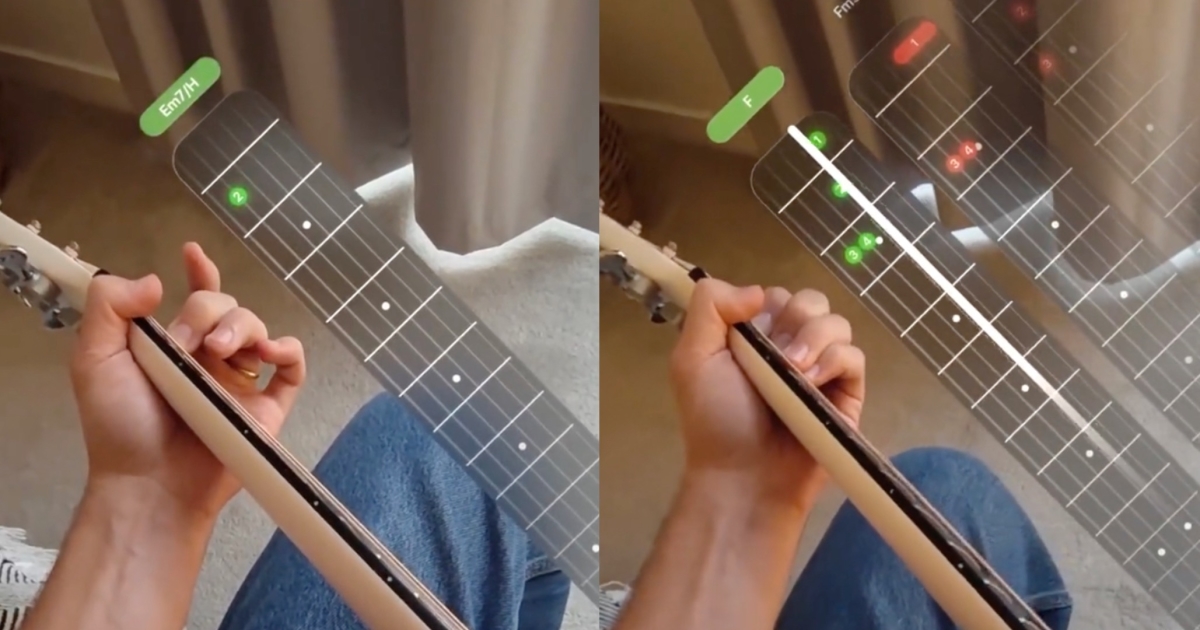
VR guitar lessons work through accurate hand tracking. VR headsets use cameras and sensors to map your hand movements in 3D space, translating them to the virtual guitar's fretboard. This allows you to physically 'play' the guitar in the virtual environment, sometimes without needing a physical instrument.
Haptic feedback is another important element. This technology attempts to simulate the feel of strings and the neck's resistance. Quality varies, but even basic haptic feedback can increase presence and realism. Spatial audio also adds to immersion, positioning sounds accurately in 3D space to create a realistic environment.
VR allows you to visualize finger placement in ways traditional lessons can't. You can see your fingers relative to the fretboard from any angle, making it easier to identify and correct errors. VR can also simulate different guitar feels, like choosing between a Stratocaster or Les Paul neck profile and adjusting string tension. This is valuable for players exploring different guitar types.
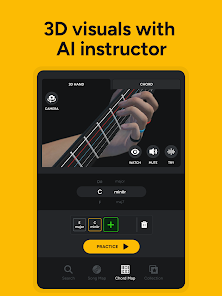
AI-powered feedback is also a significant development. Some platforms use AI algorithms to analyze your technique in real-time, offering guidance on finger positioning, timing, and strumming. This provides an additional layer of objective analysis, complementing a teacher's input. The app IMMERROCK, shown on YouTube in March 2025, demonstrates this with its mixed reality guitar learning on Meta Quest.
- Accurate hand tracking maps your movements to the virtual guitar.
- Haptic feedback simulates the feel of strings and the neck.
- Spatial audio creates a realistic soundscape.
- 3D visualization improves finger placement understanding.
Current Platforms and Software
Several platforms are leading VR guitar learning. IMMERROCK offers a mixed reality experience for Meta Quest, with interactive lessons and real-time feedback. It's in early access, so expect ongoing development.
Yousician, known for online guitar learning, is experimenting with VR integration to enhance its curriculum, possibly through virtual practice spaces or gamified lessons. Fender Play does not currently offer VR, but may explore it given the trend.
Virtuoso is building VR-first music learning experiences that emphasize social jamming in virtual environments. Lesson content varies greatly; some focus on foundational techniques, others on specific genres. Choose a platform that matches your learning goals.
A common limitation is the fidelity of virtual instruments; visual representations are improving but don't match physical guitars. Haptic feedback often feels rudimentary. Integration with existing learning resources is limited, though Yousician's exploration is a start. Many platforms charge $10-$30 per month via subscription.
- IMMERROCK: Mixed reality learning for Meta Quest (early access).
- Yousician: Exploring VR integration with existing curriculum.
- Virtuoso: VR-first platform with a focus on social jamming.
Virtual Reality Guitar Learning Platform Comparison (2026)
| Platform Name | Headset Compatibility | Lesson Focus | Key Features | User Sentiment |
|---|---|---|---|---|
| Yousician VR | Meta Quest series, HTC Vive | Beginner to Intermediate | Hand tracking, gamified lessons, song library integration | Generally positive, praised for engaging format, some report tracking inconsistencies. |
| Flowtime Guitar VR | Meta Quest series, Valve Index | Intermediate to Advanced | AI-powered feedback on technique, focus on timing and precision, customizable practice routines | Positive, particularly for experienced players, noted for in-depth analysis but potentially steep learning curve for beginners. |
| GuitarHero Live VR | PlayStation VR2, Meta Quest series | Beginner to Intermediate | Song-based learning, visual feedback, multiplayer jamming | Mixed, appealing for casual players, some criticism for limited focus on core technique. |
| Fender Play VR | Meta Quest series | Beginner | Structured learning path, guided lessons, focus on foundational skills | Positive for beginners, appreciated for clear instruction, limited content for advanced players. |
| JamSpace VR | HTC Vive, Valve Index, Meta Quest series | All Levels | Multiplayer collaboration, virtual jam sessions, instrument customization | Positive for social learning, relies on user-generated content quality, variable experience. |
Qualitative comparison based on the article research brief. Confirm current product details in the official docs before making implementation choices.
Beyond Technique: VR’s Creative Edge
VR helps unlock creative potential beyond chords and scales. Jamming with others in a virtual environment allows collaboration with musicians worldwide, removing logistical challenges. Virtuoso offers virtual jam sessions with different interaction levels.
VR lets you perform on virtual stages, offering the thrill of playing for an audience without real-world pressure. This can help overcome stage fright and build confidence. VR also provides a unique environment for experimenting with guitar tones and effects, simulating vintage amplifiers or rare pedals without the expense.
This differs from playing along with backing tracks, which lack the dynamic interplay of a real jam session. In VR, you respond to other musicians in real-time, improvising and collaborating closely to a real musical experience. It builds musicality, not just technical proficiency.
Integrating tools like Spotify within VR environments is promising. You could learn a viral TikTok riff and then immediately jam with others using the same song. This seamless integration between learning and creation is where VR excels.
Guitar Masters
This playlist features iconic guitar tracks with distinct and often complex guitar parts, perfect for aspiring guitarists to analyze and attempt to replicate within a VR learning environment. The variety of styles also offers a broad spectrum of techniques to explore.
Accessibility and the Democratization of Lessons
undefined VR lessons can bring the expertise of top instructors to anyone with a headset, regardless of their location.
The cost factor is more nuanced. While the initial investment in a VR headset can be significant, the ongoing cost of VR lessons may be lower than traditional in-person lessons. A typical in-person lesson can easily cost $50-$100 per hour, while VR subscription fees are generally in the $10-$30 per month range. However, this doesn't account for the cost of the headset itself.
Accessibility for people with disabilities is another important consideration. VR can offer alternative learning methods for individuals who may have difficulty with traditional techniques. For example, someone with limited hand mobility might be able to use hand tracking to play virtual chords. However, it’s important to note that VR isn’t a perfect solution and may not be accessible to everyone.
Compared to online lessons via video conferencing, VR offers a significantly more immersive and interactive experience. Online lessons can be effective, but they often lack the sense of presence and spatial awareness that VR provides. The ability to physically "be" in the same virtual space as your instructor can greatly enhance the learning process.
The Hardware Horizon: 2026 and Beyond
Looking ahead to 2026 and beyond, the future of VR hardware promises to further enhance the guitar learning experience. We can expect significant advancements in headset resolution, leading to sharper and more realistic visuals. This will make virtual guitars look and feel more like their physical counterparts. Improvements in hand tracking accuracy will also be crucial, allowing for more precise and nuanced control.
Haptic feedback technology is poised for a major leap forward. Current haptic systems are limited in their ability to accurately simulate the feel of strings and the neck. However, new technologies are emerging that use advanced materials and actuators to create a more realistic tactile experience. We might even see the development of dedicated VR guitars – physical controllers designed specifically to replicate the feel of a real instrument.
Augmented reality (AR) will likely play an increasingly important role. AR overlays digital information onto the real world, allowing you to see virtual fretboard diagrams superimposed on your actual guitar. This could be a powerful tool for learning chords and scales, providing real-time visual guidance. The line between VR and AR will likely blur as headsets become more versatile.
The push towards lighter, more comfortable headsets will also be key. Current VR headsets can be bulky and uncomfortable to wear for extended periods. As technology advances, we can expect headsets to become smaller and more ergonomic, making them more accessible for longer practice sessions. Wireless connectivity will become standard, eliminating the need for cumbersome cables.
Challenges Remaining: Realism and Connection
Despite the immense potential, VR guitar learning still faces several challenges. Replicating the feel of a real guitar is arguably the biggest hurdle. Current haptic technology is simply not advanced enough to fully simulate the nuances of string tension, wood resonance, and fretboard texture. This can be a significant barrier for experienced guitarists who are accustomed to the tactile feedback of a physical instrument.
Motion sickness is another potential issue. Some users experience nausea or dizziness when using VR headsets, particularly during fast-paced or visually complex experiences. While advancements in display technology and tracking algorithms are helping to mitigate this problem, it remains a concern. Careful calibration and gradual acclimation are important.
The lack of physical interaction with a teacher is also a drawback. While VR can provide personalized feedback, it can't fully replicate the nuanced guidance of an experienced instructor who can observe your technique in person and offer tailored advice. The social aspect of learning – the camaraderie and inspiration that comes from playing with others – can also be lost in a virtual environment.
Overcoming these hurdles will require continued innovation in hardware and software. More realistic haptic feedback, improved motion prediction algorithms, and the development of more engaging social features are all essential. Ultimately, the success of VR guitar learning will depend on its ability to bridge the gap between the virtual and physical worlds.
Would you be willing to take guitar lessons in VR?
As virtual reality technology continues to evolve, we want to know if you are ready to trade your traditional practice space for a digital environment. Share your thoughts on the future of guitar education below.


No comments yet. Be the first to share your thoughts!