
The shift in guitar learning
My first guitar lessons were a slog of endless scales and theory. Most of us start that way, hitting a wall of boredom before we even play a song. Today, the barrier to entry is lower because the tools have changed.
For decades, learning guitar meant one of two things: finding a qualified teacher or relying on instructional books and videos. Then came the first wave of online lessons, offering convenience and affordability. Now, we're seeing a new revolution – artificial intelligence is being integrated into guitar learning tools, promising personalized feedback and accelerated progress. It's a pretty big deal.
AI isn't a replacement for a human teacher, but it is a viable alternative for people who can't afford $60 an hour for lessons. In 2026, the tech has moved past simple tuners into real-time coaching.
The goal here is practical advice. If you’re considering learning guitar, or looking to improve your skills, you need to know what tools are available and how to choose the right path for you. We’ll try to be honest about the strengths and weaknesses of each approach, and avoid the overly enthusiastic marketing you often see.
What AI apps actually do
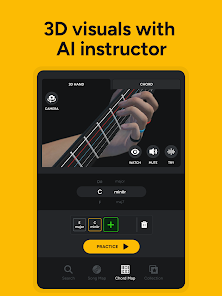
Modern apps use audio analysis to track your signal. They don't just check if you hit a C major; they measure your timing and whether your bends are reaching the right pitch. It is a massive step up from the static video lessons of the 2010s.
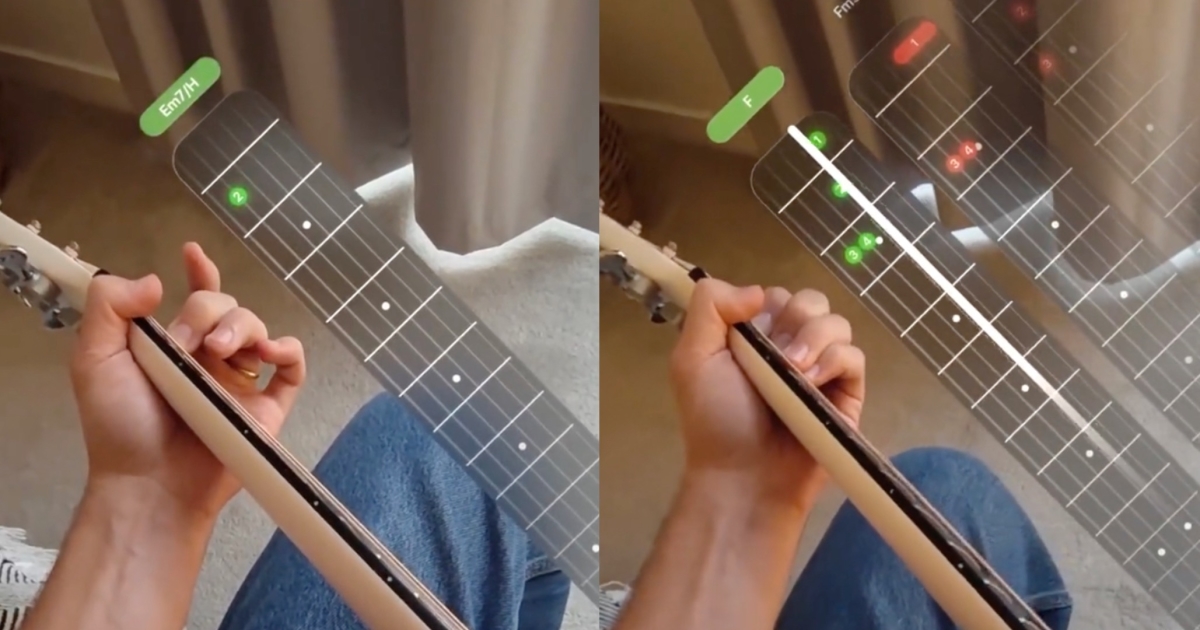
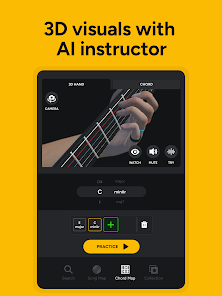
Many apps offer features like chord recognition, which can identify chords you’re playing, even if you don’t know their names. Some can even generate tablature automatically from audio recordings, a huge time-saver. Personalized learning paths are becoming standard, adapting to your skill level and learning style. These apps aren't one-size-fits-all; they attempt to tailor the experience to you.
Gamification is another common element. Points, badges, and leaderboards are used to motivate you and make practice more engaging. It can be surprisingly effective, turning what might feel like a chore into a bit of a game. However, don’t mistake gamification for actual musical development. It's a tool, not an end in itself.
But let's be realistic. AI isn’t magic. It’s still relatively early days for this technology. AI can struggle with nuanced playing, complex rhythms, and subtle variations in tone. It's also not a substitute for developing your ear – the ability to recognize intervals, chords, and melodies by ear. A good ear is fundamental to musicality, and A It can help you identify mistakes, but it can't instill the musicality that comes from listening and feeling the music.
- Real-time feedback for pitch and timing
- Chord recognition: Identifies chords you're playing
- Automated tablature: Generates tabs from audio
- Personalized learning: Adapts to your skill level
- Gamification: Points, badges, and leaderboards for motivation
AI Feature Benchmarks (2026)
- Real-time Pitch Detection: Apps like Yousician and Fender Play demonstrate accuracy ranging from 90-98% in controlled environments, though this can decrease with background noise or complex techniques.
- Chord Recognition: Ultimate Guitar’s Tabs Pro app and Chordify report chord recognition success rates between 85-95% for common open chords, with more complex voicings and inversions posing a greater challenge.
- Personalized Lesson Adaptation: Flowkey adapts lesson difficulty based on user performance, utilizing algorithms to adjust tempo and introduce new techniques incrementally. Similar adaptation is found in Simply Guitar.
- Gamification - Points & Badges: Many apps, including Rocksmith+, incorporate points, badges, and streaks to motivate practice and track progress, mirroring common game design principles.
- Gamification - Leaderboards: Some platforms, like Yousician, feature leaderboards allowing users to compare progress with others, fostering a competitive learning environment.
- Progress Tracking & Analytics: Apps such as Guitar Tricks offer detailed progress tracking, analyzing accuracy, timing, and consistency to identify areas for improvement.
- Song Library Integration: Platforms like Ultimate Guitar Tabs & Chords integrate vast song libraries with interactive learning tools, allowing users to learn songs directly within the app.
The case for human teachers
Despite the rise of AI, traditional guitar lessons still hold a lot of value. The biggest advantage is the one-on-one interaction with a qualified teacher. A good teacher can provide personalized feedback that goes beyond simply identifying errors. They can understand why you’re making those errors and help you develop strategies to overcome them. That’s something AI struggles with.
A skilled teacher can also foster your musicality, helping you develop your ear, sense of rhythm, and overall musical expression. They can introduce you to different genres, techniques, and artists, broadening your musical horizons. This is where a teacher can truly inspire you, igniting a passion for music that an app simply can't replicate.
However, traditional lessons aren’t without their drawbacks. Cost is a major factor. Hourly rates can vary widely, and lessons can quickly add up. Scheduling can also be a challenge, especially if you have a busy lifestyle. And let’s be honest, not all teachers are created equal. Finding a teacher who is both knowledgeable and a good communicator can take time and effort.
I think the best teachers are those who can adapt to their students’ learning styles and goals. They don't just teach technique; they nurture a love of music. That’s a rare quality, and it’s something that’s difficult to find in an app.
App Roundup: Top AI Guitar Teachers of 2026
The AI guitar app market is crowded, but a few stand out. Here’s a look at some of the leading contenders as of late 2026. We're focusing on apps that offer a comprehensive learning experience, not just simple chord finders or tab viewers.
Yousician remains a popular choice, known for its game-like interface and structured learning paths. It’s great for beginners and intermediate players, offering feedback on timing and accuracy. Pricing is tiered, with a free version and premium subscriptions starting around $20 per month. Its biggest weakness is that it can feel a little rigid, lacking the flexibility of some other apps.
Fender Play is another strong contender, particularly for those interested in learning popular songs. It offers a curated library of lessons and songs, with a focus on building a solid foundation in technique. Subscriptions are around $10 per month, and it integrates well with Fender’s ecosystem of guitars and accessories. It's very polished, but perhaps less adaptable to learning outside of the Fender song library.
Ultimate Guitar Tab Pro has expanded beyond just tabs, incorporating AI-powered learning tools. It can listen to your playing and provide feedback, and it offers a vast library of songs. A subscription costs around $15 per month. The interface can be a bit cluttered, but the sheer amount of content is a major draw.
Songsterr is similar to Ultimate Guitar, focusing on tablature with playback and interactive features. It’s a great resource for learning specific songs, but it’s less focused on structured lessons. Subscriptions are around $10 per month. It's a fantastic tool for working on specific parts of songs, but not a complete learning system.
Chordify is unique in its ability to analyze any song and generate chords in real-time. It’s a great tool for learning songs by ear, but it doesn’t offer structured lessons. Subscriptions start around $7 per month. It's best used as a supplement to other learning methods.
GuitarTricks has been around for a while and has adapted well to the AI era. It provides structured lessons across many genres with a strong emphasis on technique. Monthly subscriptions are around $20. It’s a solid all-around option, but can feel a little dated compared to some of the newer apps.
- Yousician: Best for beginners who want a game-like interface ($20/month)
- Fender Play: Popular songs, Fender ecosystem integration ($10/month)
- Ultimate Guitar Tab Pro: Huge song library, AI feedback ($15/month)
- Songsterr: Interactive tabs, song-focused learning ($10/month)
- Chordify: Chord analysis, learning by ear ($7/month)
- GuitarTricks: Structured lessons, multiple genres ($20/month)
Essential Gear for Your Guitar Learning Journey

Dreadnought acoustic guitar with sunburst finish · Includes gig bag, tuner, strings, strap, picks, and instructional DVD · Suitable for beginners
This bundle provides a complete starter kit for aspiring guitarists, offering a quality instrument and all the necessary accessories to begin learning.

Clip-on tuner for all instruments · Features a highly accurate display · Rotatable for easy viewing
The SNARK SN-8 is a reliable and accurate tuner essential for maintaining proper pitch, a fundamental skill for any musician.

Quick-change capo designed for electric guitars · Allows for fast and easy key changes · Made in the USA with durable materials
This capo enables guitarists to effortlessly alter the key of their songs, expanding their playing possibilities and simplifying chord transitions.

Set of two padded tubular guitar stands · Velveteen padding protects instrument finish · Tubular design for stability
These guitar stands offer a secure and protective way to store instruments, keeping them readily accessible and preventing accidental damage.

Taktell Piccolo metronome · Provides audible tempo beats · Compact and portable design
A metronome is crucial for developing a strong sense of rhythm and timing, aiding in consistent practice and performance.
As an Amazon Associate I earn from qualifying purchases. Prices may vary.
Practice Smarter, Not Harder: AI-Driven Techniques
AI apps can be powerful tools for enhancing your practice routine. Features like loop creation allow you to isolate specific sections of a song for focused practice. This is incredibly useful for tackling difficult passages or perfecting a solo. You can slow down the tempo without affecting the pitch, making it easier to learn complex rhythms. And many apps allow you to adjust the volume of individual tracks, so you can practice with or without the backing instruments.
AI can also identify areas where you're struggling. By analyzing your playing, it can pinpoint specific chords, scales, or techniques that you need to work on. Some apps then suggest targeted exercises to address those weaknesses. The idea is to make your practice more efficient and effective, focusing on the areas where you need the most improvement.
I'm still a little skeptical about the effectiveness of AI-generated practice routines. While the concept is promising, I haven’t seen evidence that they consistently lead to faster progress than well-designed, human-created exercises. I think it’s important to use these routines as a starting point, and to supplement them with your own practice techniques.
One feature I find particularly useful is the ability to track your progress over time. Many apps provide detailed statistics on your accuracy, timing, and consistency. This can be a great motivator, and it can help you identify areas where you’re improving – or where you’re plateauing.
- Loop Creation: Isolate difficult sections for focused practice
- Tempo Adjustment: Slow down without pitch changes
- Track Volume Control: Practice with or without backing instruments
- Weakness Identification: AI pinpoints areas for improvement
Cost Breakdown: Apps vs. Lessons
Let’s talk money. The cost of learning guitar can vary dramatically depending on the method you choose. Traditional in-person lessons typically range from $40 to $100 per hour, depending on the teacher’s experience and location. A package of 10 lessons could cost anywhere from $300 to $800.
Online lessons, typically conducted via video conferencing, are generally cheaper, ranging from $25 to $60 per hour. However, you still need to factor in the cost of a reliable internet connection and a decent webcam. AI guitar learning apps, on the other hand, typically charge a monthly or annual subscription fee. As we saw earlier, these subscriptions range from around $7 to $20 per month.
Don’t forget to factor in the cost of supplementary materials. Books, tabs, and accessories like picks, strings, and tuners can add up. A good quality tuner can cost $20-$50, while a collection of songbooks might set you back $50-$100. And if you don't already have one, you'll need a guitar, which can range from a couple hundred dollars for a beginner instrument to several thousand for a high-end model.
In the long run, AI apps are generally the most affordable option, especially if you’re self-motivated and can stick to a consistent practice schedule. However, the value of personalized guidance from a human teacher shouldn’t be underestimated.
AI-Powered Guitar Learning Apps vs. Traditional Lessons: A 2026 Comparison
| Feature | AI-Powered Apps | Traditional Lessons (1-on-1) | Traditional Lessons (Group) |
|---|---|---|---|
| Cost | Generally Lower | High | Medium |
| Flexibility/Scheduling | High | Medium | Low |
| Personalization | Medium | High | Medium |
| Feedback Quality | Medium | High | Medium |
| Learning Pace | Self-Paced | Adjustable, Instructor-Led | Fixed, Group-Paced |
| Curriculum Structure | Often Gamified, Structured Paths | Highly Customizable | Standardized, Less Flexible |
| Access to Expertise | Algorithm-Driven, Limited Human Interaction | Direct Access to Experienced Instructor | Instructor-Led, but diluted by group size |
| Motivation & Accountability | Variable, Relies on Self-Discipline | High, Direct Instructor Support | Medium, Peer Influence |
Illustrative comparison based on the article research brief. Verify current pricing, limits, and product details in the official docs before relying on it.
The Hybrid Approach: Best of Both Worlds?
I believe the most effective approach for many guitarists is a hybrid one – combining the benefits of AI-powered apps with traditional lessons. Use apps for focused practice, technique development, and learning new songs. They’re great for building muscle memory and honing your skills. Think of them as your daily workout routine.
Then, supplement that with occasional in-person lessons with a qualified teacher. These lessons can provide personalized guidance, address specific challenges, and help you develop your musicality. A teacher can offer feedback on your overall progress, identify areas where you’re stuck, and provide inspiration and motivation.
Apps can also be a valuable tool for lesson preparation. You can use them to learn the basics of a new technique or song before your lesson, allowing you to make the most of your time with your teacher. And apps can help you track your progress between lessons, providing valuable data for your teacher to review.
This approach allows you to leverage the strengths of both methods. You get the convenience and affordability of AI, combined with the personalized guidance and musical inspiration of a human teacher. It's a powerful combination.
No comments yet. Be the first to share your thoughts!