
The shift toward digital lessons
For decades, learning guitar meant lessons with a teacher, bulky instructional books, or a lot of trial and error with online tabs. These methods aren’t bad, but they all have limitations. Traditional lessons can be expensive and finding a good teacher isn’t always easy. Books lack personalized feedback, and online tabs often don’t teach you how to play, just what to play. The promise of AI-powered learning is to address these problems.
The music tech world is booming, and AI is at the forefront. We’ve seen AI tools emerge for music creation, mixing, and mastering, and now it’s transforming guitar education. Early claims of AI revolutionizing music learning were often overblown, promising instant mastery with minimal effort. The reality in 2026 is more nuanced. AI isn't a replacement for dedicated practice, but it’s become a powerful tool to enhance the learning process.
The appeal is simple: these apps are cheap and they're always in your pocket. They adjust to how you play, which beats the old one-size-fits-all book method. But don't expect perfection yet. The tech still glitches, and the experience can feel clunky when the app misreads a note.
How the tech actually works
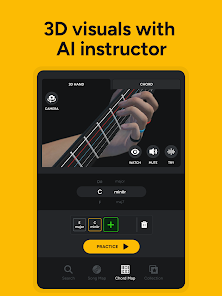
Several AI technologies are working behind the scenes in these guitar learning apps. Automatic Music Transcription (AMT) is key. This is the process of converting audio into a musical score – essentially, the app "listening’ to you play and figuring out what notes you’re hitting. Chord recognition builds on this, identifying the chords you’re playing, even if your fingering isn"t perfect.
Real-time pitch detection is another crucial element. The app needs to accurately determine the pitch of each note you play, and do it immediately to provide timely feedback. This relies on sophisticated algorithms that analyze the audio signal. Adaptive learning algorithms are perhaps the most impactful. These algorithms analyze your performance, identify your strengths and weaknesses, and adjust the difficulty and content of the lessons accordingly.
Underneath it all are concepts like machine learning and neural networks. These aren’t magic, but mathematical models that allow the AI to learn from data. The more data the AI processes – in this case, recordings of guitar playing – the better it gets at recognizing patterns and providing accurate feedback. It's not about the AI 'understanding' music in a human way; it's about recognizing statistical probabilities and responding accordingly.
Top AI Guitar Apps of 2026
The AI guitar learning app market is competitive, with several strong contenders. Yousician remains a popular choice, known for its gamified approach and extensive song library. It excels at providing immediate feedback on timing and accuracy, making it great for beginners. However, some users find the gamification a little overwhelming, and the app can be overly strict with its scoring.
Fender Play has significantly integrated AI features since its launch. It now offers personalized learning paths based on your musical interests and provides detailed feedback on technique. It benefits from Fender’s brand recognition and access to a wealth of guitar resources. Its focus leans towards learning songs quickly, which isn't ideal if you want a strong foundation in music theory.
Chordify is a unique app that focuses on chord recognition and creating simplified chord charts for any song. It's incredibly useful for learning to play along with your favorite music, but it doesn’t offer structured lessons. It’s more of a supplementary tool than a complete learning system. The accuracy of chord detection isn't always perfect, especially with complex arrangements.
Ultimate Guitar AI, built on the foundation of Ultimate Guitar’s massive tab database, offers AI-powered transcription and practice tools. It’s strong for learning songs and provides access to a huge community of guitarists. Its AI transcription is improving rapidly, but still can struggle with nuanced playing. It’s a good choice for intermediate players who want to expand their repertoire.
Songtive is a newer app gaining traction, specializing in personalized song recommendations and adaptive lessons. It uses AI to analyze your playing style and suggest songs that match your skill level and musical preferences. It's particularly good for intermediate players looking for a challenge. The song library is smaller than some of the more established apps.
GuitarZero is a standout for its focus on real-time technique analysis. It uses advanced sensors and AI algorithms to provide detailed feedback on your hand position, finger pressure, and strumming technique. It's aimed at intermediate to advanced players who want to refine their skills. The hardware component adds to the cost, and the app requires a compatible device.
JamStack AI is an interesting entrant, focusing on AI-assisted improvisation and jam sessions. It can generate backing tracks in various styles and adapt to your playing in real time. It’s a fun way to practice your improvisational skills, but it’s not a substitute for learning music theory. It’s best suited for players who already have a solid foundation.
Musopia continues to improve its adaptive learning engine, offering a highly personalized learning experience. It assesses your strengths and weaknesses and creates a customized learning path. It’s a good all-around app for beginners to intermediate players. Its interface can feel a bit dated compared to some of the newer apps.
- Yousician: Great for beginners, gamified learning.
- Fender Play: Personalized paths, strong brand recognition.
- Chordify: Chord recognition, learn songs quickly.
- Ultimate Guitar AI: Vast song library, AI transcription.
- Songtive: Personalized song recommendations.
- GuitarZero: Real-time technique analysis.
- JamStack AI: AI-assisted improvisation.
- Musopia: Adaptive learning engine.
AI-Powered Guitar Learning App Comparison - 2026
| App Name | Skill Level Focus | Key Features | Real-time Feedback Quality | Song Library Size | User Interface (Rating 1-5) |
|---|---|---|---|---|---|
| Yousician | Beginner to Intermediate | Gamified lessons, chord recognition, progress tracking, personalized learning paths. | Generally accurate, focuses on timing and note accuracy. Can sometimes misinterpret complex techniques. | Extensive, covering many genres and artists. | 4 |
| Fender Play | Beginner to Intermediate | Structured learning paths, video lessons with professional instructors, chord diagrams, practice exercises. | Good for basic chord changes and strumming patterns. Less sophisticated for nuanced playing. | Large, with a focus on popular songs and Fender artists. | 4.5 |
| Ultimate Guitar Tabs & Chords (with AI features) | All Levels | Tablature access, chord diagrams, interactive lessons, AI-powered chord detection from audio, auto-scroll. | AI chord detection is improving, but accuracy varies depending on audio quality and complexity. Feedback on playing is limited. | Massive, user-generated content, largest online guitar tab archive. | 3.5 |
| Chordify | Beginner to Intermediate | Automatic chord transcription from any song, simplified chord charts, key detection. | Focuses solely on chord recognition; provides no feedback on timing or technique. | Vast, based on songs available on major streaming platforms. | 3 |
| Songsterr | Intermediate to Advanced | High-quality tablature, realistic guitar sound, playback speed control, multi-track playback. | No real-time feedback on playing technique, relies on visual learning from tablature. | Large, professionally created tablature. | 4 |
| GuitarTricks | Beginner to Advanced | Core Learning System, song library, style-based learning, access to live lessons. | Provides feedback on timing and accuracy, but lacks detailed analysis of technique. | Extensive, with lessons covering various styles and techniques. | 4 |
Illustrative comparison based on the article research brief. Verify current pricing, limits, and product details in the official docs before relying on it.
Adaptive Learning & Personalized Paths
Adaptive learning is where AI truly shines in guitar education. These apps don't just present a linear curriculum; they assess your skill level and tailor the lessons to your individual needs. This typically starts with a placement test to determine your current ability. The AI then tracks your progress, identifying your strengths and weaknesses, and adjusts the difficulty and content accordingly.
If you consistently struggle with barre chords, the app will provide more exercises to help you master them. If you excel at fingerpicking, it will introduce more challenging fingerpicking patterns. This personalized approach is far more efficient than traditional methods, which often require you to work through material that’s either too easy or too difficult.
The 'gamification' aspect often plays a role. Points, badges, and leaderboards are used to motivate you and keep you engaged. While some find this motivating, others find it distracting. The effectiveness of gamification is subjective. Ultimately, the goal is to make learning fun and engaging, and for many players, these apps succeed in doing so.
However, the effectiveness of these adaptive learning algorithms depends on the quality of the data they’re based on. If the AI is trained on a limited dataset, it may not be able to accurately assess your skill level or recommend appropriate lessons. It’s also important to note that adaptive learning is not a substitute for deliberate practice. You still need to put in the time and effort to improve.
Beyond the Basics: Advanced Features
Many of these apps are moving beyond basic chord and strumming lessons, offering advanced features powered by AI. AI-powered song transcription is becoming increasingly common. You can upload an audio recording of a song, and the app will attempt to transcribe it into a chord chart. The accuracy varies depending on the complexity of the song and the quality of the recording.
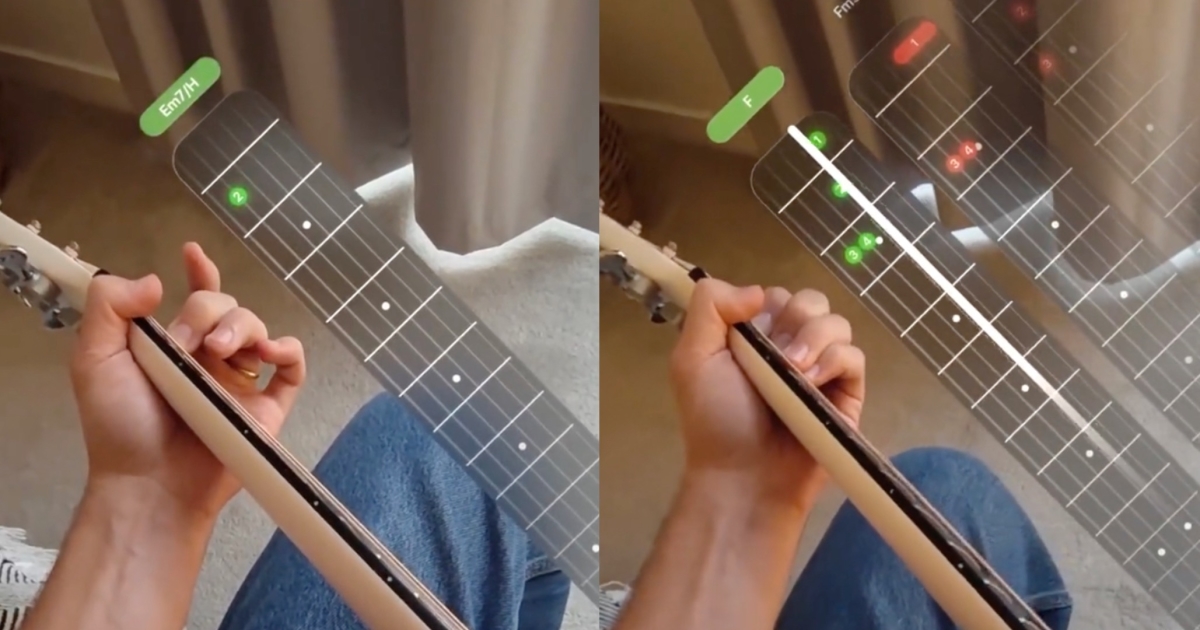
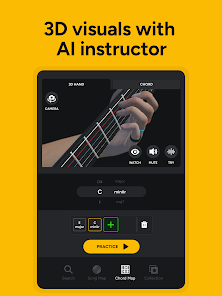
Chord recognition from audio recordings is another useful feature. You can play a chord, and the app will identify it for you. This is helpful for learning new chords or figuring out songs by ear. Some apps are even experimenting with tools for composing and improvising. They can generate backing tracks in various styles and adapt to your playing in real time.
A growing number of apps are exploring style emulation. You can select a guitarist – for example, Jimi Hendrix or Eric Clapton – and the app will analyze their playing style and provide exercises to help you emulate it. This is a fascinating concept, but it’s still in its early stages of development. AI-assisted jam sessions are also emerging, allowing you to play along with an AI-powered band that responds to your playing.
Finally, some apps are starting to integrate music theory lessons. The AI can explain the underlying concepts of music theory and how they apply to the songs you’re learning. This is a valuable addition, as music theory is essential for becoming a well-rounded guitarist.
What's coming next
The next 5-10 years will likely see significant advancements in AI-powered guitar learning. We can expect to see more accurate and responsive real-time feedback, thanks to improvements in machine learning algorithms and sensor technology. Haptic feedback – providing physical sensations to guide your finger placement – is a potential development, though it requires specialized hardware.
Virtual reality (VR) integration could create immersive learning experiences, allowing you to practice in realistic virtual environments. AI-powered songwriting tools could help you compose your own music, providing suggestions for chords, melodies, and arrangements. The question of whether AI will eventually replace human guitar teachers is complex.
While AI can provide personalized instruction and feedback, it cannot replicate the human connection and mentorship that a good teacher offers. It's more likely that AI will become a valuable tool for teachers, helping them to personalize lessons and track student progress. The future is likely a hybrid model, combining the best of both worlds.
Do you think AI guitar learning apps will eventually replace traditional guitar lessons?
Vote below and share your perspective on whether smart practice tools can fully take the place of traditional guitar instruction.
No comments yet. Be the first to share your thoughts!