

The Rise of the AI Guitar Tutor: What’s Changed Since 2024?
Back in 2024, AI-powered guitar learning was largely about novelty. Apps like Yousician and Ultimate Guitar’s AI features were starting to gain traction, offering gamified lessons and basic chord recognition. Guitars Republic noted the initial promise, but also the limitations—often feeling more like a game than serious instruction. These apps aimed to make guitar learning cheaper and more accessible than in-person lessons.
By 2026, things are demonstrably different. We’re seeing a leap in capability driven by a few key factors. More powerful AI models, like those used in music creation software, are being adapted for education. Smartphone processing power has increased significantly, allowing for more complex real-time analysis of audio. Perhaps most importantly, larger, more accurate datasets of guitar playing are available to train these algorithms. This isn’t just about recognizing chords; it’s about understanding how someone is playing them.
The improvements aren’t just cosmetic. Early AI apps often struggled with nuances like vibrato or subtle timing issues. Now, apps can provide more specific feedback, identify areas for improvement, and even tailor practice routines to individual weaknesses. The shift is toward genuinely personalized instruction, something that was previously only available with a human teacher. This isn't about replacing teachers, though. It's about offering a powerful tool for independent practice and supplementing formal instruction.
Core Technologies Powering the New Wave of Apps
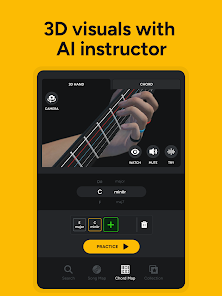
At the heart of these apps lies a combination of several AI technologies working in concert. Automatic chord recognition is still fundamental, but it’s far more sophisticated than it used to be. Apps now use machine learning models trained on vast libraries of guitar recordings to accurately identify chords, even in noisy environments or with variations in playing style.
Real-time feedback is the next step. This relies on audio analysis to detect things like timing inaccuracies, string noise, and improper finger placement. The apps then provide immediate feedback to the player, guiding them towards better technique. Microsoft is actively incorporating this into their 365 suite, showing the mainstream interest in this technology.
Personalized practice routines are where the AI really shines. These apps don't just present a linear curriculum; they adapt to your skill level and learning style. They identify your weaknesses and create customized exercises to address them. This is achieved through machine learning algorithms that analyze your playing data and adjust the difficulty and focus of the lessons accordingly.
Audio analysis is the engine driving much of this. Apps use techniques like spectrogram analysis and pitch detection to break down the audio signal and extract meaningful information. The accuracy of this analysis is critical, and improvements in signal processing algorithms have played a significant role in the recent advancements. However, it’s still not perfect, and apps can sometimes misinterpret complex chords or fast passages.
App Deep Dive: Leading Platforms in 2026
The market is fairly crowded, but several platforms have emerged as leaders. FretSpark stands out with its focus on ear training and improvisation. It doesn’t just teach you what to play, but how to listen and respond musically. It’s best suited for intermediate to advanced players looking to expand their creative skills, but beginners might find the initial learning curve steep. The subscription is $19.99/month.
ChordWise takes a different approach, prioritizing foundational skills. It's designed for absolute beginners and focuses on building a solid understanding of chords, strumming patterns, and basic music theory. It’s incredibly user-friendly and provides very clear, step-by-step instructions. However, it can feel a bit limited for more experienced players. ChordWise offers a free tier with limited content, and a premium subscription for $9.99/month.
AcousticAI is interesting because it’s specifically tailored for acoustic guitarists. It recognizes the nuances of acoustic playing – fingerstyle techniques, dynamic control – and provides feedback accordingly. It also features a large library of acoustic guitar songs and lessons. It's a good all-rounder, but doesn’t necessarily excel in any one area. The yearly subscription is $129.99.
Finally, GuitarPro AI (an evolution of the long-standing GuitarPro software) integrates AI directly into a traditional tab editor. This allows you to import tablature, have the AI analyze your playing against it, and receive real-time feedback. It's a powerful option for players who prefer learning from tabs, but requires some existing knowledge of music notation. It's a one-time purchase of $99.
AI-Powered Guitar Learning App Comparison - 2026
| App Name | Target Skill Level | Primary Learning Style | Unique Features | Price (approximate) |
|---|---|---|---|---|
| Fender Play | Beginner to Intermediate | Song-Based | Personalized learning paths, progress tracking, official Fender content. | Subscription-based, varying tiers |
| Yousician | Beginner to Advanced | Song-Based | Real-time feedback, gamified lessons, extensive song library, adaptive learning. | Subscription-based, multiple plan options |
| Ultimate Guitar Tabs & Chords (with AI features) | Beginner to Advanced | Song-Based | Vast tab and chord database, AI-powered chord recognition, interactive lessons, community features. | Freemium model with subscription for full access |
| Guitar Tricks | Beginner to Intermediate | Technique-Focused | Structured learning paths, core learning system, access to instructors, wide range of genres. | Subscription-based, different access levels |
| Chordify | Beginner to Intermediate | Theory-Driven | Automatic chord detection from any song, simplified chord diagrams, key detection. | Freemium with subscription for advanced features |
| Songsterr | Intermediate to Advanced | Song-Based | High-quality tabs with realistic guitar sound, playback speed control, multiple instrument tracks. | Subscription-based access to full catalog |
| Moises (with Guitar Learning Tools) | Beginner to Advanced | Song-Based | AI-powered music separation (isolate guitar tracks), chord detection, key detection, practice tools. | Subscription-based, tiered plans |
Illustrative comparison based on the article research brief. Verify current pricing, limits, and product details in the official docs before relying on it.
Beyond Chords: How AI is Tackling More Complex Skills
Early AI guitar apps were largely focused on the basics – chords, strumming, scales. But the 2026 generation is starting to tackle more complex skills. Ear training, for example, is now a core feature in several apps. FretSpark, as mentioned before, is particularly strong in this area, offering exercises that help you identify intervals, chords, and melodies by ear.
Improvisation guidance is another area of growth. Some apps can analyze your playing and suggest scales or chord progressions that would fit well with the current music. This isn't about generating solos for you, but about providing tools and suggestions to help you develop your own improvisational skills. It’s a subtle difference, but an important one.
Music theory instruction is also becoming more integrated. Apps are now able to explain the underlying principles behind chords, scales, and progressions. This helps you understand why things work, rather than just memorizing patterns. This is a crucial step towards becoming a more musical guitarist.
There’s even some early experimentation with songwriting assistance. A few apps can analyze your chord progressions and suggest melodies or lyrical ideas. These features are still in their infancy, but they hint at the potential for AI to become a creative partner in the songwriting process. It’s unlikely AI will write a hit song on its own anytime soon, but it can certainly provide inspiration and assistance.
Test Your Musical Foundation: A Quiz for the AI Guitarist
AI-powered guitar learning apps are revolutionizing how we practice, but a solid understanding of music theory remains crucial. This quiz tests your knowledge of fundamental concepts – scales, chords, and intervals – that these apps often build upon. See how well you know your musical building blocks!
The Human Element: AI as a Supplement, Not a Replacement
Despite the advancements in AI, the value of a human guitar teacher remains undeniable. A good teacher can provide personalized feedback that goes beyond what any algorithm can offer. They can assess your playing with nuance, identify subtle errors, and provide encouragement and motivation.
AI excels at providing structured lessons and objective feedback, but it lacks the emotional intelligence and adaptability of a human teacher. A teacher can adjust their approach based on your individual needs and learning style, and can provide guidance on things like musical expression and performance technique.
I believe the most effective approach is to use AI as a supplement to traditional lessons. AI can help you practice more efficiently, identify your weaknesses, and track your progress. But a teacher can provide the human connection, guidance, and inspiration that you need to stay motivated and reach your full potential.
The social aspect of learning matters too. Playing in a band or taking group lessons provides the feedback an algorithm can't simulate.s can provide a sense of community and collaboration that AI simply can't replicate. It’s about sharing your passion for music with others and learning from each other.
Content is being updated. Check back soon.
Troubleshooting and Limitations: What AI Can’t (Yet) Do
While impressive, AI guitar learning apps aren’t without their limitations. Inaccurate chord recognition remains a common issue, particularly with complex chords or fast passages. Noise and poor audio quality can also throw off the algorithms. It's important to ensure a quiet recording environment and a clear audio signal.
The apps can also struggle with more nuanced techniques, like bends, slides, and vibrato. They may recognize that you’re attempting these techniques, but they often can’t provide detailed feedback on your execution. This is an area where human feedback is still essential.
Another limitation is the lack of contextual understanding. AI can tell you what you’re playing incorrectly, but it often can’t explain why it sounds bad. It can’t provide the same level of musical insight as a human teacher.
Privacy is also a concern. These apps typically require access to your microphone, and some may collect data about your playing habits. It’s important to review the app’s privacy policy and understand how your data is being used. Be mindful of what you're recording and sharing.
Looking Ahead: Future Trends in AI-Powered Guitar Education
The future of AI guitar learning is likely to be shaped by several key trends. We’ll see more sophisticated AI models that are capable of understanding and responding to more complex musical concepts. Expect improvements in chord recognition, technique analysis, and ear training.
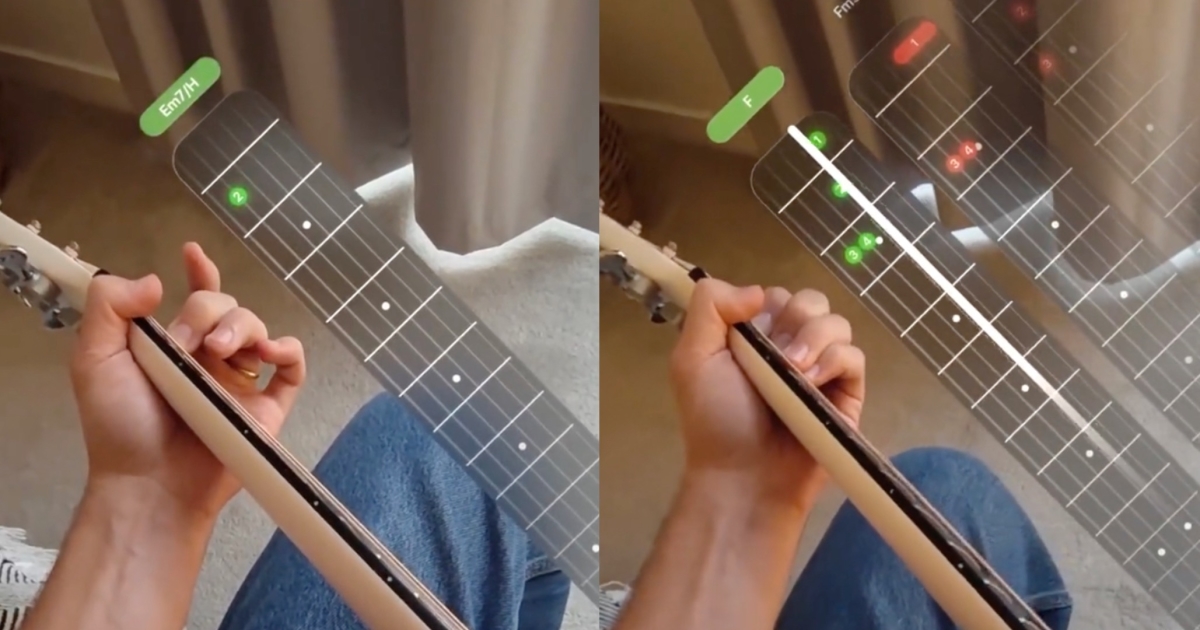
Integration with virtual reality (VR) and augmented reality (AR) is another exciting possibility. Imagine learning guitar in a virtual environment, with AI providing real-time feedback and guidance. AR could overlay instructions and visualizations directly onto your guitar, making it easier to learn new techniques.
Personalized learning paths based on individual musical tastes are also on the horizon. AI could analyze your preferred genres and artists and create customized lessons and exercises that align with your interests. This would make learning more engaging and motivating.
Generative AI could play a role in creating personalized backing tracks and exercises. Imagine an app that generates a unique backing track tailored to your skill level and musical preferences. It’s a powerful concept, and one that could revolutionize guitar practice. However, it's important to remember the human element. AI should enhance, not replace, the joy of playing music.
Content is being updated. Check back soon.
No comments yet. Be the first to share your thoughts!