

The growing demand for green guitars
Musicians and consumers are increasingly aware of the environmental impact of their purchases. This shift reflects a fundamental change in values, with sustainability becoming more important. There's a growing desire for products that align with ethical and environmental principles.
The music industry contributes to deforestation and resource depletion. Traditional guitar manufacturing relies heavily on wood, often from vulnerable or slow-growing species. This demand puts pressure on forests, and production can generate significant waste, prompting a conversation about responsible manufacturing.
Consumers are responding. A recent study by Nielsen showed a 73% increase in sales of products marketed as sustainable between 2018 and 2023. While that data isn’t specific to guitars, it signals a broader preference for environmentally conscious brands. Musicians are starting to ask questions about where their instruments come from and how they’re made, and they’re willing to support companies that share their values. This demand is driving innovation and pushing the industry towards a greener future.

Tonewood alternatives
The heart of sustainable guitar building lies in finding alternatives to traditional tonewoods like mahogany and rosewood, both of which have faced concerns regarding over-harvesting and environmental impact. These woods are prized for their tonal qualities, but their scarcity necessitates exploration of other options. The good news is luthiers are exploring quite a few.
Roasted woods are gaining popularity. The roasting process – essentially kiln-drying wood at a controlled temperature – increases stability and reduces the demand for slow-growth, old-growth timber. It also alters the tonal characteristics, often resulting in a warmer, more focused sound. Reclaimed wood, salvaged from old buildings or fallen trees, is another fantastic option, giving materials a second life.
But the innovation doesn’t stop there. Materials like Richlite, a composite made from recycled paper and resin, and High-Pressure Laminate (HPL) are being used for backs and sides. Even bamboo, a rapidly renewable resource, is finding its place in guitar construction. As Guitar World reported in their piece on alternative tonewoods, luthiers are actively seeking ways to reduce reliance on endangered species.
It’s important to be realistic. These alternatives don’t always replicate the sound of mahogany or rosewood perfectly. There are tonal differences. But many players are finding that these differences aren't necessarily drawbacks – they simply offer a different sonic palette. And for many, the environmental benefits outweigh any perceived tonal compromises.
- Roasted Woods: Increased stability, warmer tone.
- Reclaimed Wood: Gives existing materials a second life.
- Richlite: Durable, sustainable composite.
- HPL: Consistent, cost-effective alternative.
- Bamboo: Rapidly renewable resource.
Tonewood Alternatives for Sustainable Guitar Manufacturing
| Material | Sustainability Score | Typical Sound Characteristics | Common Applications | Cost (Relative to Mahogany) |
|---|---|---|---|---|
| Roasted Alder | High | Balanced, with a slight emphasis on clarity | Body | Similar |
| Paulownia | High | Warm, lightweight, with good resonance | Body | Lower |
| Black Walnut | Medium | Warm, rich, with good sustain | Body, Neck | Higher |
| Ash (responsibly sourced) | Medium | Bright, articulate, with good sustain | Body | Similar |
| Maple (responsibly sourced) | Medium | Bright, clear, with good sustain | Neck, Body, Fretboard | Similar to Higher |
| Koa (responsibly sourced) | Medium | Warm, sweet, with a complex overtone structure | Body, Fretboard | Higher |
| Cherry (responsibly sourced) | Medium | Warm, balanced, with good projection | Body, Neck | Similar |
| Bamboo | High | Bright, focused, with good sustain | Body, Neck | Potentially Lower |
Qualitative comparison based on the article research brief. Confirm current product details in the official docs before making implementation choices.
Republic Guitars: Local manufacturing
Republic Guitars, based in Austin, Texas, presents an interesting case study in sustainable guitar building. Their commitment to local manufacturing is a significant part of their ethos. By keeping production within the US, they reduce transportation emissions and support the local economy. This localized approach is a strong statement in an industry often reliant on global supply chains.
Republic Guitars utilizes a variety of wood types, depending on the model, and actively promotes their use of different species. They aren't solely reliant on the most endangered or heavily harvested woods. They also focus on building instruments that are accessible in price, which contributes to sustainability by making quality instruments last longer.
Online discussions, particularly on Facebook, have raised questions about Republic Guitars' quality following the original owner's passing. While a change in leadership can be a valid concern, drawing definitive conclusions requires extensive testing and long-term observation. The brand continues to operate and innovate, with its commitment to local manufacturing remaining a key differentiator.
Finishes and glues: Reducing chemical footprint
The environmental impact of guitar building extends beyond wood selection. Traditional guitar finishes, like nitrocellulose lacquer and polyurethane, often contain volatile organic compounds (VOCs) that are harmful to both workers and the environment. These finishes contribute to air pollution and can pose health risks.
Fortunately, alternatives are emerging. Water-based finishes are becoming increasingly popular, offering a lower-VOC option. UV-cured finishes are another promising development, providing a durable and environmentally friendly coating. Natural oil finishes, like linseed oil and tung oil, are also gaining traction, offering a traditional and sustainable approach.
Glue selection is also important. Many traditional glues contain formaldehyde, a known carcinogen. Manufacturers are increasingly switching to formaldehyde-free glues, prioritizing worker health and reducing environmental impact.
- Water-based finishes: Lower VOCs.
- UV-cured finishes: Durable and environmentally friendly.
- Natural oil finishes: Traditional and sustainable.
- Formaldehyde-free glues: Prioritize worker health and environmental impact.
Common Guitar Finishes & Sustainability
- Nitrocellulose Lacquer - A traditional finish known for its beautiful aging, but relies on petrochemicals and releases VOCs. Requires many coats. Eco-Friendliness: Poor
- Polyester Finishes - Durable and widely used, polyester is also petroleum-based and emits VOCs, though generally less than nitrocellulose. Eco-Friendliness: Fair
- Polyurethane Finishes - Another durable plastic-based finish, polyurethane offers good protection but isn't derived from renewable resources and has VOC concerns. Eco-Friendliness: Fair
- Water-Based Lacquers - A growing alternative, these finishes use water as a solvent, significantly reducing VOC emissions. Still often rely on acrylic or polyurethane resins. Eco-Friendliness: Good
- Oil Finishes (Linseed, Tung) - Natural oils penetrate the wood, offering a beautiful, matte finish. Renewable resource, low VOCs, but require more maintenance. Eco-Friendliness: Excellent
- UV-Cured Finishes - These finishes utilize ultraviolet light to rapidly cure, reducing VOC emissions compared to traditional solvent-based finishes. Resin base still typically synthetic. Eco-Friendliness: Good
- Shellac - A natural resin secreted by the lac bug. Biodegradable and non-toxic, but can be brittle and less durable than other options. Eco-Friendliness: Excellent
Top eco-conscious guitar brands
Several brands are implementing sustainable practices in guitar manufacturing to minimize their environmental impact. Here are a few standouts.
Lowden Guitars (Northern Ireland) is widely respected for its commitment to sustainable wood sourcing. They work closely with suppliers to ensure that all wood is harvested responsibly and that forests are managed sustainably. They also prioritize efficient manufacturing processes to minimize waste. They were one of the first brands to really push for responsible forestry.
Faith Guitars (UK) focuses on responsibly managed forests and uses FSC-certified wood whenever possible. The Forest Stewardship Council (FSC) certification guarantees that the wood comes from forests that are managed in an environmentally sound, socially beneficial, and economically viable manner. Faith also uses water-based finishes and minimizes packaging.
Walden Guitars (USA) utilizes a blend of sustainable practices, including the use of alternative tonewoods like Sapele and Mahogany sourced from sustainable plantations. They also focus on efficient manufacturing and minimizing waste. Walden offers a good balance of affordability and sustainability.
Cole Clark Guitars (Australia) is known for its innovative use of alternative tonewoods, including Australian Blackwood and Bunya. They also employ water-based finishes and prioritize sustainable manufacturing processes. Their guitars are known for their unique tone and eco-friendly construction.
Martin Guitar (USA), while a larger company, has made significant strides in sustainability. They’ve implemented sustainable forestry practices, use water-based finishes, and are actively exploring alternative tonewoods. Their commitment is notable given their scale.
Taylor Guitars (USA) has been a long-time advocate for sustainable wood sourcing and has invested heavily in responsible forestry initiatives. They use FSC-certified wood and are committed to reducing their environmental impact throughout their supply chain.
Featured Products

40 Watts of power · 2x6.5 Inch Speakers · Chorus Effect
Fender's Acoustasonic amp is recommended for its versatility and power, suitable for various acoustic performances.
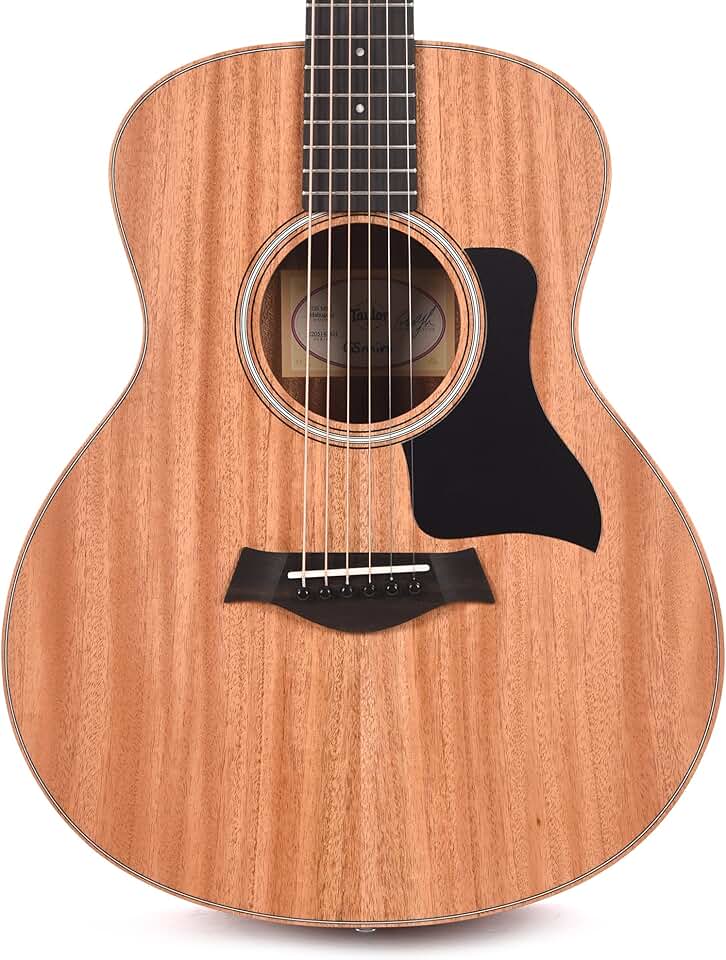
Compact GS Mini body size · Mahogany back and sides · Solid Sitka spruce top
The Taylor GS Mini Mahogany offers exceptional playability and a rich tone in a portable package, embodying Taylor's commitment to quality.

Comprehensive history of Martin Guitars · Features photos, stories, and craftsmanship details · Covers both acoustic and electric guitar legacy
This reference book delves into the rich history and craftsmanship of Martin Guitars, a brand synonymous with acoustic instrument innovation.

Solid Sitka spruce top · Nato back and sides · Rosewood fingerboard and bridge
The Yamaha FG800J is a highly regarded acoustic guitar known for its solid top construction and balanced sound, representing excellent value.

Concert body shape · Sitka spruce top · African Mahogany back and sides
The Breedlove ECO Discovery S Concert CE is highlighted for its use of sustainable African Mahogany and Sitka spruce, offering a resonant and eco-conscious acoustic-electric option.
As an Amazon Associate I earn from qualifying purchases. Prices may vary.
Packaging and shipping
Packaging and shipping also contribute to a guitar's environmental footprint. Traditional packaging often uses excessive foam and plastic, which are difficult to recycle and end up in landfills.
Brands are increasingly adopting more sustainable packaging solutions. Using recycled cardboard, biodegradable packing peanuts, and minimizing the amount of packaging material are all positive steps. Some companies are even using innovative materials like mushroom packaging – a completely compostable alternative to styrofoam.
Shipping also presents an opportunity for improvement. Offering carbon-neutral shipping options, where the company offsets the carbon emissions from transportation, is a growing trend. While it’s not a perfect solution, it’s a step in the right direction. These smaller details collectively make a difference.
The future of sustainable guitar building
Sustainable guitar building holds potential, alongside challenges. Innovations like lab-grown wood, cultivated from wood cells in a controlled environment, could eliminate the need to harvest trees. Mycelium-based materials, grown from mushroom roots, are also being explored as sustainable alternatives.
3D-printed guitars using sustainable filaments like cornstarch or recycled plastic are another possibility. These technologies are still in early development, with cost, scalability, and maintaining tonal quality being significant hurdles.
The biggest challenge will be convincing musicians that these alternatives sound good. Sustainability alone isn’t enough; guitars must play well and sound inspiring. While widespread adoption of lab-grown wood by 2026 is unlikely, current research and development will shape the industry's future. Demand for sustainable guitars will continue to grow, pushing manufacturers to innovate and embrace environmentally responsible practices.




No comments yet. Be the first to share your thoughts!