

Guitar Learning's AI Shift
For decades, learning guitar followed a pretty set path: a teacher, books, or perhaps some early online video lessons. It could be expensive, access wasn't always easy, and getting truly personalized feedback was a challenge. Now, things are changing rapidly. Artificial intelligence is stepping in, and by 2026, it will have fundamentally altered how we learn to play.
AI isn't just about replacing teachers; it’s about augmenting the learning experience. The core benefit is personalization – AI can adapt to your skill level, learning style, and musical goals in a way traditional methods struggle to match. This is possible thanks to technologies like speech recognition that can understand your playing, music information retrieval to analyze songs, and machine learning to build a customized learning path.
The speed of development in this area is remarkable. What was science fiction a few years ago – an app that listens to you play and gives real-time feedback – is now a reality. Expect even more sophisticated tools to emerge between now and 2026. We're seeing a shift from passively watching lessons to actively engaging with a smart, responsive learning system.
The potential is huge, but it’s also a quickly evolving space. New apps and features are appearing constantly, so staying informed is key. This guide will break down the core technologies, highlight the leading apps expected to be prominent in 2026, and offer some insight into what the future holds.
Core AI Technologies in Play
At the heart of these apps lie several key AI technologies. Automatic Music Transcription (AMT) is one of the most important. It’s the process of converting audio – your playing, or a song – into a digital representation of notes and chords. While AMT has been around for a while, recent advancements in machine learning have significantly improved its accuracy. However, it's not perfect; complex passages and noisy recordings can still throw it off.
Real-time pitch detection and chord recognition are also crucial. These technologies allow the app to "hear’ what you’re playing as it happens. They identify the notes you’re fretting and the chords you"re forming, and compare them to the expected output. The accuracy here is generally quite good, particularly for common chords and notes, but subtle variations in technique can sometimes be missed.
But the real magic happens when these technologies are combined with AI algorithms that personalize your learning path. These algorithms analyze your performance, identify your strengths and weaknesses, and adjust the difficulty and content accordingly. They might suggest exercises to improve your timing, or introduce new chords based on your progress. Yousician, for example, uses this approach extensively.
Accurately interpreting nuanced playing styles remains a challenge. AI struggles with things like vibrato, bends, and slides – those subtle touches that give a guitarist their unique voice. It’s improving, but it’s an area where human teachers still have a clear advantage. The goal isn't to replace the human element entirely, but to create a powerful tool that complements it.
The Leading Apps of 2026
By 2026, several AI-powered guitar learning apps are expected to dominate the market. Here's a look at some of the most promising contenders, and what sets them apart.
Yousician is likely to remain a major player. Its gamified approach and broad curriculum – covering guitar, bass, ukulele, and piano – make it appealing to a wide audience. It excels at providing real-time feedback on timing and accuracy, and it offers a huge library of songs to learn. However, some users find the gamification a bit overwhelming, and the subscription cost can be a barrier.
Fender Play is another strong contender, backed by the iconic guitar brand. It focuses on learning through popular songs, and its video lessons are high-quality and well-produced. Fender Play’s AI features are becoming more sophisticated, offering personalized recommendations and tracking your progress. It's particularly well-suited for beginners, but it may not offer the same depth as Yousician for advanced players.
Chordify takes a different approach, focusing on transcribing songs and providing chord charts. Its AI-powered transcription engine is remarkably accurate, and it allows you to learn songs by ear. While it doesn’t offer structured lessons like Yousician or Fender Play, it’s a valuable tool for intermediate and advanced players who want to expand their repertoire. They’ve been steadily improving their real-time listening and feedback.
Songsterr is a popular choice for accessing a massive library of guitar tabs and interactive playback. While not strictly an 'AI' app, they are integrating AI to enhance the accuracy of their tabs and offer more personalized learning experiences. It's a great resource for learning specific songs, but it lacks the comprehensive curriculum of some other apps.
Ultimate Guitar (with its Tab Pro feature) is also incorporating AI to improve tab accuracy and offer features like auto-scroll and looping. It's a dominant force in the tab world, and its AI enhancements will likely make it even more valuable. They are also exploring AI-driven personalized practice recommendations.
Jamulus is an open-source project that allows musicians to play together online with low latency. While not a traditional learning app, its potential for AI-powered accompaniment and personalized jamming sessions is significant. Expect to see more integration of AI into platforms like Jamulus in the coming years.
Finally, FutureSonic, a newer entrant, is generating buzz for its focus on AI-driven composition and improvisation tools. While not solely a learning app, it can help players develop their creativity and musicality. It’s a more niche offering, but it’s one to watch.
- Yousician: Gamified learning, broad curriculum, real-time feedback.
- Fender Play: Song-based learning, high-quality video lessons, beginner-friendly.
- Chordify: AI-powered transcription, chord charts, learn by ear.
- Songsterr: Massive tab library, interactive playback, AI-enhanced accuracy.
- Ultimate Guitar: Dominant tab platform, AI-driven improvements, personalized recommendations.
- Jamulus: Open-source online jam sessions, potential for AI accompaniment.
- FutureSonic: AI-driven composition and improvisation.
AI-Powered Guitar Learning App Comparison - 2026
| App Name | Beginner Friendliness | Focus | AI Personalization | Price | Platform |
|---|---|---|---|---|---|
| Fender Play | High | Song Learning | Moderate | Subscription - varies | iOS, Android, Web |
| Yousician | High | Song Learning, Technique | Strong | Subscription - range | iOS, Android, Web |
| Ultimate Guitar Tabs & Chords | Med | Song Learning | Basic | Free / Subscription | iOS, Android, Web |
| Chordify | Med | Song Learning, Chord Recognition | Basic | Free / Subscription | iOS, Android, Web |
| Guitar Tricks | Med | Technique, Song Learning | Moderate | Subscription - range | iOS, Android, Web |
| LickLibrary | Low | Technique, Song Learning (Specific Artists) | Basic | Subscription - range | iOS, Android, Web |
Illustrative comparison based on the article research brief. Verify current pricing, limits, and product details in the official docs before relying on it.
Beyond Tabs: AI-Driven Feedback
undefined timing, dynamics, and tone. This is a significant step forward.
Apps like Yousician are leading the way in this area. They can detect whether you’re rushing or dragging, and provide personalized suggestions for improvement. They can also analyze your dynamics – how hard you’re hitting the strings – and help you develop a more consistent and expressive playing style. It's also starting to offer feedback on tone, suggesting adjustments to your EQ or amplifier settings.
The potential for personalized feedback is enormous. Imagine an app that can say, “Your downstrokes are inconsistent, try focusing on keeping a steady rhythm,” or “You’re rushing this section, slow down slightly.” That level of detail was unthinkable just a few years ago. But it’s important to remember that AI isn’t a substitute for a good teacher. It can provide valuable feedback, but it can’t replace the nuanced guidance and encouragement of a human instructor.
Currently, the accuracy of AI-driven feedback isn’t perfect. It can sometimes misinterpret your playing, or provide inaccurate suggestions. But the technology is improving rapidly, and we can expect to see even more sophisticated feedback mechanisms in the coming years.
Smart Practice Tools: Gamification & Motivation
Practicing guitar can be challenging, and staying motivated is often the biggest hurdle. AI-powered apps are tackling this problem with gamification, progress tracking, and personalized challenges. The goal is to make practice more engaging and rewarding.
Gamified lessons are a common feature in apps like Yousician. You earn points, unlock new levels, and compete with other players. This can be a powerful motivator, particularly for beginners. Progress tracking allows you to see how far you’ve come, and identify areas where you need to focus your efforts. Many apps also offer personalized challenges, tailored to your skill level and goals.
Some apps incorporate social features, like leaderboards and the ability to share your progress with friends. This can add an extra layer of motivation, but it can also be a source of pressure for some players. Psychologist research shows that blended rewards, offering both intrinsic and extrinsic motivation, are the most effective for long-term habit formation.
The effectiveness of these features varies from person to person. Some players thrive on competition, while others prefer a more relaxed learning environment. The key is to find an app that aligns with your learning style and personality. It’s also important to set realistic goals and celebrate your accomplishments along the way.
What's Your Guitar Learning Style?
AI-powered guitar learning apps are revolutionizing how we practice. But to get the most out of these tools, it's helpful to understand *how* you learn best. This quick quiz will identify your dominant learning style – visual, auditory, or kinesthetic – and recommend apps that cater to your strengths. Let's find the perfect smart practice partner for your guitar journey!
The Rise of AI-Powered Transcription
One of the most exciting applications of AI in guitar learning is its ability to transcribe audio into guitar tabs and chord charts. This opens up a world of possibilities for learning songs by ear, and expanding your repertoire. Chordify is a prime example of an app that excels in this area.
The accuracy of current transcription technology is impressive, but it’s not perfect. It can handle most common chords and melodies with relative ease, but it struggles with complex arrangements, unusual tunings, and fast-paced passages. The quality of the audio recording also plays a significant role – clean, clear recordings will yield the best results.
Despite these limitations, AI-powered transcription is a valuable tool for guitarists of all levels. It can save you hours of tedious work, and it can help you learn songs that would otherwise be inaccessible. It’s also a great way to develop your ear training skills, by comparing the AI-generated transcription to your own interpretation.
As AI technology continues to improve, we can expect to see even more accurate and sophisticated transcription tools. Eventually, it may be possible to transcribe any song with near-perfect accuracy. This will have a profound impact on the way we learn and play guitar.
Future Trends: What to Expect
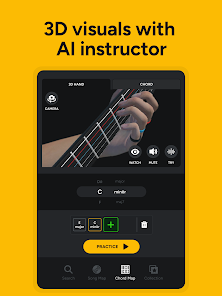
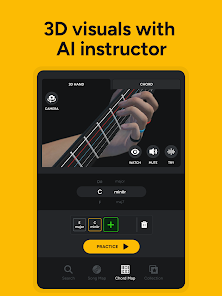
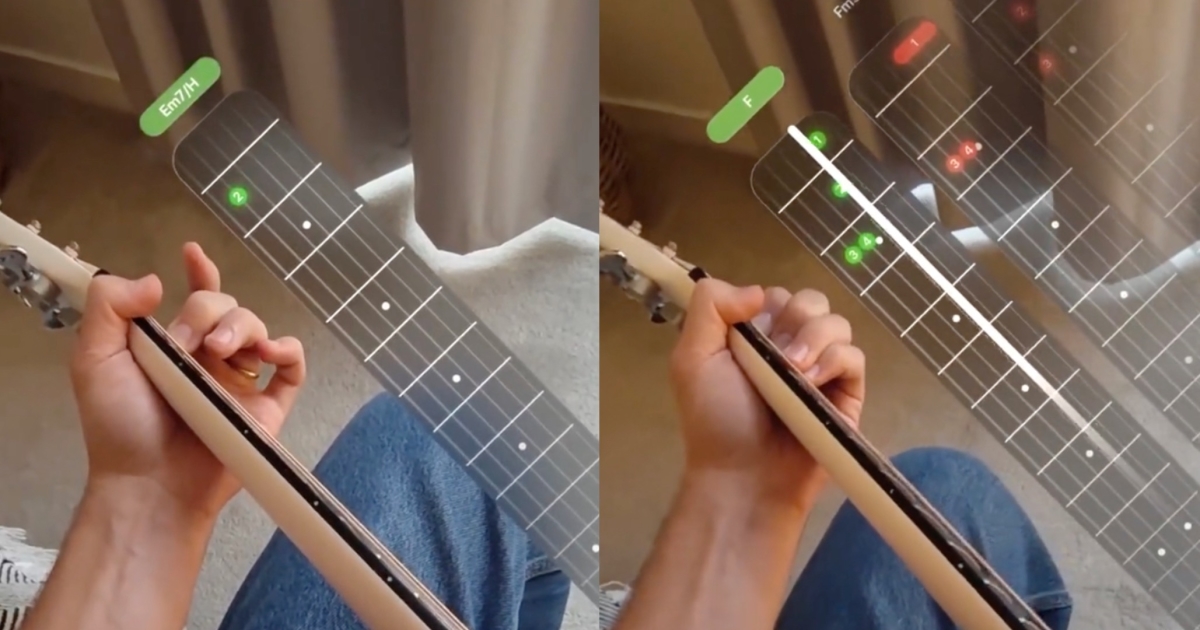
The next few years promise even more exciting advancements in AI guitar learning. One key trend is the integration of virtual reality (VR) and augmented reality (AR). Imagine learning guitar in a virtual environment, with a realistic simulation of a teacher and a fully interactive instrument.
Another potential development is the use of AI to generate personalized backing tracks. An app could analyze your playing style and create custom backing tracks that match your skill level and musical preferences. This would be a great way to practice improvising and playing along with other musicians.
We can also expect to see AI become even more adept at analyzing a player’s technique and identifying areas for improvement. An app might be able to detect subtle flaws in your form, and provide personalized suggestions for correction. This could help you avoid bad habits and maximize your potential.
The ultimate goal is to create an AI-powered guitar teacher – a virtual instructor that can provide personalized guidance and support. This teacher would be able to adapt to your learning style, provide real-time feedback, and motivate you to achieve your goals. While this is still some way off, it’s a realistic possibility in the not-too-distant future. The increasing power of generative AI models will likely accelerate this process.
Choosing the Right App for You
With so many AI-powered guitar learning apps available, choosing the right one can be overwhelming. The best app for you will depend on your individual needs and goals. Consider your skill level, learning style, budget, and preferred musical genres.
If you’re a complete beginner, Fender Play is a good choice. It offers a structured curriculum and high-quality video lessons. If you’re looking for a more gamified experience, Yousician is a great option. If you want to learn songs by ear, Chordify is the way to go. And if you’re an experienced player looking for a comprehensive tab library, Songsterr or Ultimate Guitar are worth checking out.
Don’t be afraid to try out free trials before committing to a subscription. Most apps offer a free trial period, allowing you to explore the features and see if it’s a good fit for you. Remember, there’s no one-size-fits-all solution. The key is to find an app that you enjoy using and that helps you achieve your guitar playing goals.


No comments yet. Be the first to share your thoughts!