

The Rise of Seven Strings
Extended range guitars, those with more than six strings, are becoming more common. The seven-string guitar, once mainly for metal, now appears across genres, influencing guitarists and shaping modern music.
Guitarists began exploring seven-string guitars in the late 80s and early 90s to expand their sound. Steve Vai experimented with seven and eight strings early on. By the early 2000s, bands like Meshuggah and Dream Theater showed the instrument's potential for heavy, complex music.
The 7-string was once seen as only for virtuosos. Now, players use it for its versatility, creative potential, and sonic power. It's about expanding compositional options, not just speed and complexity. This is an evolution, not a trend.
Tuning and String Gauges
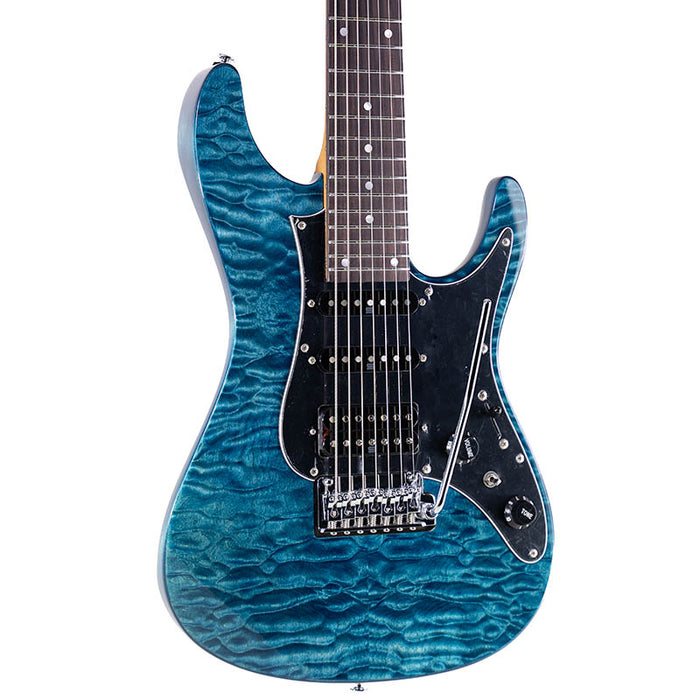
Choosing the right tuning and string gauges is important for 7-string guitars. B standard (B E A D G B E) is the most common tuning, adding a low B string. A standard and drop tunings like A or G are also used.
The low B string is thicker and needs more tension for intonation, often requiring heavier strings. A common set is .010 - .056, but experimenting is key. A .009 high E string can help balance tension and playability.
Finding the right balance is personal. Light strings can feel floppy; heavy strings are hard to bend. Experiment to find what works for your style and music.
- B Standard: B E A D G B E (Most common)
- A Standard: A E A D G B E
- Drop A: A E A D G B E
- Drop G: G E G D G B E
Common 7-String Guitar Tunings
| Tuning | String Gauges (Approximate) | Pros | Cons | Genre Suitability |
|---|---|---|---|---|
| B Standard (B F# B E A D# G#) | .010 - .056 or .010 - .059 | Widely used, provides a lower range without drastically altering familiar chord shapes. | Can require heavier strings for optimal tension, potentially harder on fingers. | Metal (Djent, Progressive), Progressive Rock, Jazz Fusion |
| A Standard (A E A D G B E) | .009 - .054 or .010 - .056 | Offers a significant range extension while maintaining relatively standard tension and feel. | May feel looser than standard tuning, requiring adjustment to playing technique. | Progressive Metal, Alternative Rock, Instrumental Music |
| Drop A (A E A D G B E) | .010 - .058 or .011 - .060 | Popular for aggressive styles, provides a powerful low end for chugging and riffs. | Low B string can be muddy if not properly set up or if the guitar's construction isn't optimized for lower frequencies. | Djent, Death Metal, Metalcore, Hardcore |
| Drop G# (G# C# G# D# A E B) | .011 - .060 or .012 - .062 | Extremely low tuning, favored for very heavy and downtuned styles. | Requires very heavy gauge strings and a long scale length to maintain reasonable tension. Can be difficult to play cleanly. | Extreme Metal, Sludge Metal, Downtempo |
| C Standard (C F A# D# G C E) | .011 - .058 | Provides a darker, heavier tone than B Standard while still being relatively accessible. | May require some adjustment to chord shapes and fingerings. | Doom Metal, Sludge Metal, Alternative Metal |
| F# Standard (F# B E A D# G# C#) | .011 - .059 | Offers a unique tonal palette and extended range, less common but gaining traction. | Requires a good understanding of extended range techniques and may require a longer scale length. | Progressive Metal, Experimental Rock |
Illustrative comparison based on the article research brief. Verify current pricing, limits, and product details in the official docs before relying on it.
Techniques Unlocked: Beyond Six Strings
A seventh string extends the range and changes possibilities for chords, melodies, and composition. It allows for extended chords, like adding a 7th, 9th, or 11th, creating richer harmonies.
You can play bass lines with chords simultaneously. This helps solo guitarists or bands without a bassist create a full sound. Tosin Abasi of Animals as Leaders is known for this technique.
The 7-string also offers new melodic possibilities. Its wider range allows for more expressive phrasing and unique melodies. It encourages thinking differently about the fretboard and expands improvisational capabilities.
Sweep picking possibilities expand with the extra string, allowing for wider arpeggios and more complex patterns. The 7-string is a distinct instrument with its own voice.
Gear Spotlight: 7-String Options in 2026
The 7-string market offers many options for different budgets and styles. Schecter provides affordable, quality guitars like the Omen Extreme-7 and C-7 Hellraiser, good for beginners.
Ibanez is known for sleek designs and playability, with models like the RG7421 and Prestige RG750 popular among professionals. Strandberg's headless, multi-scale guitars are gaining traction, especially with progressive metal players. They are more expensive but offer a unique experience.
For pickups, Seymour Duncan's 7-string humbuckers (like the Nazgul 7) offer a powerful, aggressive tone. Fishman Fluence pickups provide a modern, versatile sound. Locking tuners are essential for stability, and a good bridge improves sustain and intonation.
Smaller luthiers also create 7-string guitars. Boutique options can offer unique instruments tailored to specific needs. Research builders specializing in extended range guitars.
Content is being updated. Check back soon.
Multi-Scale and Fan-Fretted Designs
Multi-scale, or fanned-fret, 7-string guitars are more common. This design has a longer scale length on lower strings and shorter on higher strings. This improves intonation and string tension.
Benefits include clearer low-end response and a more comfortable playing experience. However, multi-scale guitars take getting used to. The angled fretboard and different scale lengths require technique adjustments.
Multi-scale designs are an innovation, but not for everyone. Beginners should start with a standard scale length 7-string before exploring multi-scale options. It's a change that can enhance playing.
Genres Embracing the Seven-String
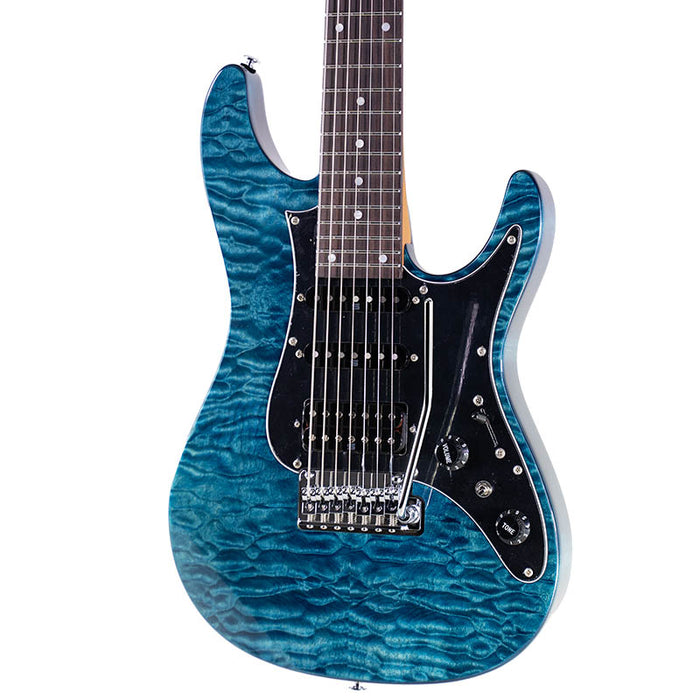
The 7-string started in progressive metal and djent but is spreading to other genres. Bands like Animals as Leaders and Periphery helped popularize it in metal
However, I’m noticing a growing number of jazz fusion players incorporating the 7-string into their setups. The extended range allows for more complex chord voicings and a wider harmonic palette, which is perfect for exploring intricate jazz arrangements. Artists like Plini are pushing the boundaries of what’s possible with the instrument.
Even genres like instrumental rock and post-rock are starting to embrace the 7-string. The ability to create atmospheric textures and layered soundscapes makes it a valuable tool for these styles. It’s really surprising to see it appearing in places I wouldn’t have expected a few years ago. This kind of crossover is a strong indicator of its growing acceptance.
The 7-string isn't about limiting yourself to one genre; it's about expanding your creative possibilities regardless of your musical style.
7 String Metal
This playlist is a prime example of the technical prowess and heavy sound that 7-string guitars bring to modern music, featuring a variety of artists who expertly utilize the extended range for complex riffs and soaring melodies.
Resources and Learning Paths
Ready to dive deeper? There are tons of resources available to help you learn the 7-string guitar. YouTube is a great place to start, with channels like Music With Marky and Jason Stallworth offering excellent beginner tutorials. These channels cover everything from tuning and string gauges to basic techniques and chord voicings.
Websites like Seymour Duncan offer chord charts and instructional materials specifically for 7-string guitars. Online guitar lesson platforms like TrueFire and JamPlay also have courses dedicated to extended range instruments. Don't underestimate the power of online communities. Reddit's r/7string is a great place to connect with other 7-string players, ask questions, and share tips.
My advice for beginners is to start slow and focus on building a solid foundation. Don’t try to learn everything at once. Master the basics, experiment with different tunings, and find what works best for you. Most importantly, have fun and enjoy the journey!
Aggressive mid-range attack, evenly balanced string response, and focused clarity, now available for extended-range guitars. The @WesHauch Jupiter Rails humbucker set is now available ready-to-order for 6-strings AND 7-strings: https://t.co/lFKS35QLUr pic.twitter.com/Eqr74cW0r3
— Seymour Duncan (@SeymourDuncan) December 6, 2023

No comments yet. Be the first to share your thoughts!