

Spot the resonator cone type
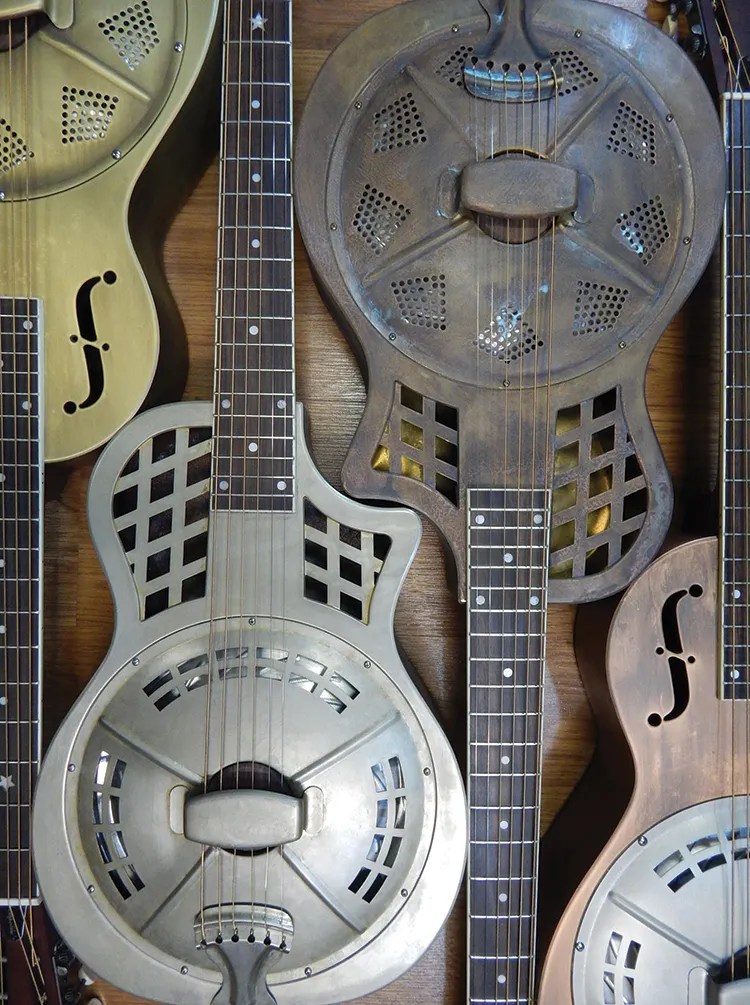
The heart of a resonator guitar is the cone, and choosing the right configuration is the most important decision you’ll make when buying a Republic Guitars resonator. The cone acts as the bridge between your strings and the soundboard, dictating volume, tone, and playability. Republic offers two distinct setups: the biscuit cone and the spider cone. Each serves a different musical purpose, and understanding the difference will help you pick the instrument that matches your playing style.
The biscuit cone: direct and punchy
A biscuit cone uses a single, solid wooden bridge piece (the "biscuit") that sits directly on top of the cone. This design transfers string vibration straight into the metal cone with minimal damping. The result is a bright, sharp, and highly articulate tone with strong midrange punch. Biscuit cones are the standard for slide guitar because the direct contact allows for smooth glissandos and clear note definition. If you play Delta blues, country blues, or any style that relies heavily on a slide, the biscuit cone is your go-to. Republic’s biscuit models are known for their cutting presence in a band mix.
The spider cone: warm and complex
The spider cone features a metal bridge assembly that resembles a spider’s legs, resting on the cone’s surface. This design introduces a slight mechanical separation between the strings and the cone, which softens the attack and adds harmonic complexity. Spider cones produce a warmer, mellower, and more rounded tone with enhanced bass response. They are less aggressive than biscuit cones, making them ideal for fingerstyle playing, jazz, or rockabilly where you want clarity without the harshness of a slide-focused setup. Republic’s spider models offer a richer, more balanced sound that fills out the room naturally.
Comparison: biscuit vs. spider
| Feature | Biscuit Cone | Spider Cone |
|---|---|---|
| Tone Character | Bright, sharp, punchy | Warm, mellow, complex |
| Best For | Slide guitar, blues, country | Fingerstyle, jazz, rockabilly |
| Volume | High, cutting | Moderate, balanced |
| Playability | Smooth glissandos, clear notes | Rich harmonics, rounded attack |
| Republic Models | Highway 61 (Biscuit) | Highway 61 (Spider) |
Republic’s Highway 61 series exemplifies this choice, offering both configurations in the same body style so you can hear the difference firsthand. Whether you need the aggressive bite of a biscuit or the smooth warmth of a spider, Republic builds these cones with precision to ensure consistent performance across their lineup.
Pick the right scale length
Scale length determines string tension and fret spacing, two factors that dictate whether a resonator feels like a familiar acoustic or a distinct slide instrument. Republic Guitars builds its single-cone cutaway models in two distinct lengths: a standard 25-inch scale and a 22-inch Traveler scale. Choosing between them depends on your hand size, playing style, and how much tension you prefer under your fingers.
The 25-inch standard scale offers a familiar feel for players transitioning from standard acoustics. The longer neck provides more string tension, which helps the bronze cone project volume and sustain. This setup is ideal for flatpickers and players who want a wider fretboard for complex chord shapes. However, the longer distance between frets can be challenging for players with smaller hands or those who rely heavily on barre chords.
The 22-inch Traveler scale shortens the distance between frets, making the neck significantly more accessible. This length reduces string tension, which can make bending strings and vibrato easier. It is particularly well-suited for slide players who need precise intonation along the neck, as the shorter scale reduces the margin for error in fret placement. The Traveler model also features 12 frets to the body, compared to 14 on the standard, which changes the instrument’s balance and makes it lighter and more comfortable for long playing sessions.
To determine which scale fits you, measure the distance from your wrist to the tip of your middle finger. If your span is less than 7 inches, the Traveler scale’s tighter fret spacing will likely feel more natural. If you have a larger hand or prefer the brighter, tighter response of higher tension, the standard 25-inch scale will serve you better.
Check the fretwork and finish
Republic Guitars offers solid build quality for the price, but like many factory-built instruments, the final setup isn't always perfect. Buyers frequently report minor finish blemishes and sharp fret edges that require attention. A careful inspection before purchase—or a quick visit to a luthier afterward—ensures the guitar plays comfortably and looks its best.
Inspect the fret edges
Run your fingers lightly along the side of the neck, moving from the nut to the body. Republic frets are generally well-dressed, but some users note they can be "a tad sharp" on the edges. If you feel any rough spots or sharp metal protruding from the fretboard, the guitar may cause discomfort during play. This is an easy fix for a technician: a simple file and polish can smooth the edges without affecting the intonation or playability.
Look for fret buzz
Play every note on every string, especially in the lower positions where action is typically lower. Listen for any buzzing against the frets that doesn't occur when you play the same note higher up the neck. While some buzz is normal in resonator playing, excessive buzzing indicates uneven fret heights or a neck angle issue. Republic guitars are known for their solid construction, so significant buzz often points to a setup need rather than a structural defect.
Check the finish for blemishes
Examine the body under good lighting, paying close attention to the back and sides where handling marks are common. Minor finish blemishes are frequently reported by buyers and are often considered acceptable given the price point. Look for small chips, scratches, or uneven coating. These cosmetic issues don't affect the sound or playability, but they can impact resale value and personal satisfaction. If you're buying used, document any blemishes and factor them into the price negotiation.
Verify the cone and biscuit contact
While not strictly fretwork, the connection between the bridge, biscuit, and cone is critical for resonator tone. Press down firmly on the bridge saddle and listen for any rattling or loose movement. Republic's cone and biscuit systems are robust, but shipping can sometimes loosen components. Ensure the bridge sits flat and the biscuit is centered. A loose connection can cause unwanted buzz that mimics fret issues.
Final setup considerations
If you find any issues, don't panic. Most Republic guitars benefit from a professional setup, especially if you're switching string gauges or tuning styles. A good setup includes adjusting the bridge height, checking the nut slots, and ensuring the truss rod is properly adjusted. This small investment pays off in improved playability and tone.
Watch a Highway 61 demo
Start by defining what a good Republic Guitars Resonator purchase has to prove before you compare prices. Separate must-have requirements, seller credibility, condition, delivery timing, and return terms from nice extras that can wait. Keep the first pass narrow. Shortlist a few credible sources, check the evidence behind each listing, and reject options that hide basic details. A cheaper offer is not useful if it leaves the most important risk unanswered. The simplest way to use this section is to verify the seller, compare the total cost, and resolve the biggest risk before you commit.
Understand Republic Guitars history
Republic Guitars was founded in 2007 by Frank Helsley, a Texas teenager who became obsessed with the sound of acoustic blues after hearing Johnny Winter play. Frustrated by the lack of affordable options for modern resonator players, Helsley started the brand to bridge the gap between high-end craftsmanship and accessible pricing.
The company’s mission is straightforward: bring affordable resonators to everyone from novices to professionals. This focus on value has resonated with the music community, earning the attention of legends like Johnny Winter and members of the Eagles and the Doobie Brothers.
When you choose a Republic resonator, you are buying into a brand built on a specific philosophy rather than generic mass production. Their instruments are designed to deliver the authentic blues tone players seek without the steep price tag often associated with the format.
Common resonator: what to check next
Before committing to a Republic Guitars resonator, it helps to understand who is behind the build and what those specific model choices mean for your playing style.
Who makes Republic Guitars?
Republic Guitars was founded in 2007 by Frank Helsley, a Texas native whose passion for the instrument started when he heard Johnny Winter play acoustic blues. Frustrated by the lack of affordable options for modern players, Helsley began designing his own instruments. Today, Republic Guitars is based in Austin, Texas, where they continue to produce resonators that blend traditional tone with modern playability and accessibility.
What is the difference between the standard and Traveler models?
The main difference lies in scale length and portability. The standard Republic resonator features a 25-inch scale length with 14 frets to the body, offering a full, rich tone suitable for most playing styles. The Traveler model, by contrast, has a 22-inch scale length with 12 frets to the body. This shorter scale makes the guitar more compact and easier to transport, making it an excellent choice for musicians who travel frequently or have smaller hands.
Are Republic resonators suitable for beginners?
Yes, Republic Guitars is known for making resonators accessible to players at all levels. Because Frank Helsley started the brand to address the lack of affordable options, their instruments are designed to be approachable without sacrificing tone. Whether you are picking up a resonator for the first time or are an experienced player looking for a reliable backup, Republic models provide a solid entry point into slide guitar.
Put The Guitarist’s Blueprint into practice
No comments yet. Be the first to share your thoughts!